Importance of Extracurricular Activities in School Education
posted on Sep 11, 2026
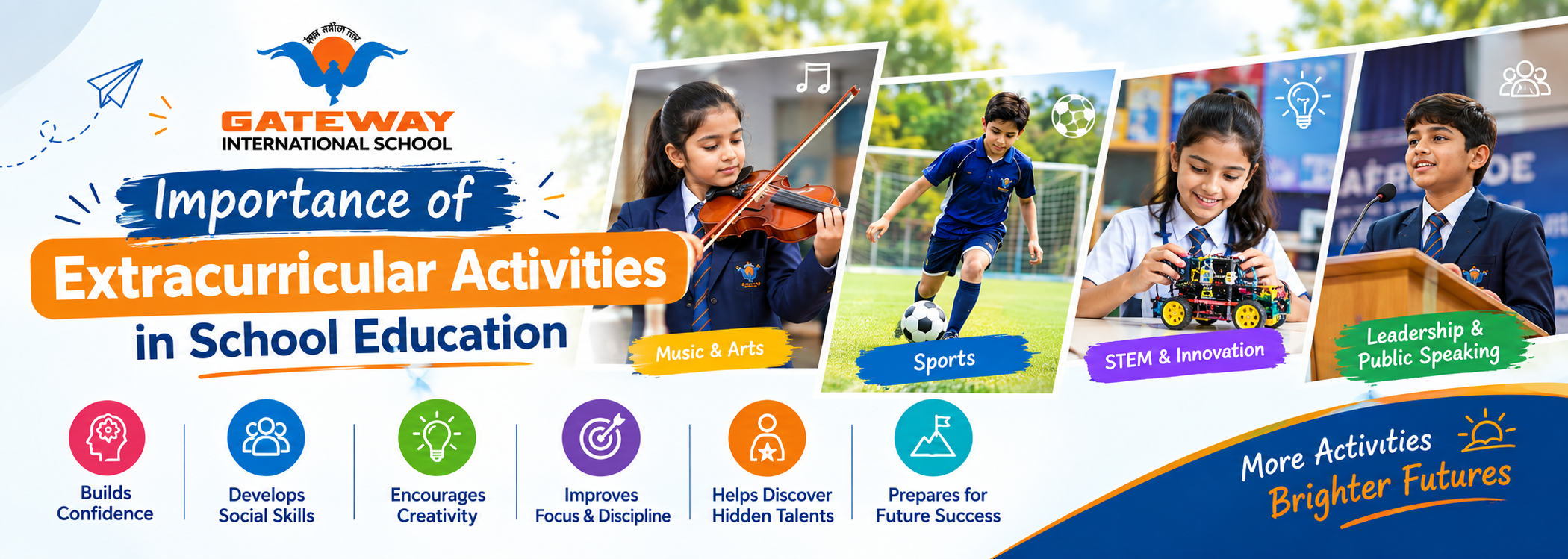
Education is not limited to textbooks, examinations, and classroom lessons. A well-rounded learning experience also gives students opportunities to explore their interests, develop practical skills, and discover their strengths. This is where Extracurricular Activities play an important role in School Education.
Activities such as sports, music, dance, art, debate, public speaking, theatre, coding, and various clubs allow students to learn beyond the traditional classroom environment. They can contribute to a student's personal, social, emotional, and academic development.
What Are Extracurricular Activities?
Extracurricular Activities are activities that students participate in alongside their regular academic curriculum. They can include sports, cultural programmes, creative activities, competitions, clubs, community initiatives, and other interest-based programmes.
These activities give students opportunities to explore areas that may not always be covered extensively during regular classroom lessons.
Why Are Extracurricular Activities Important in School Education?
1. Develops Confidence
Participating in competitions, performances, presentations, and team activities can give students opportunities to step outside their comfort zones.
For example, performing on stage or speaking in front of an audience can help students become more comfortable expressing their thoughts and ideas.
Over time, these experiences can contribute to greater self-confidence.
2. Encourages Teamwork
Many Extracurricular Activities involve working with other students. Sports teams, school clubs, theatre groups, music ensembles, and group projects require students to communicate and cooperate.
Students learn that achieving a common goal often requires listening to others, sharing responsibilities, and respecting different perspectives.
3. Promotes Physical Fitness
Sports and other physical activities are an important part of a balanced education. Regular participation in physical activities can encourage students to remain active and develop habits that support a healthy lifestyle.
Activities such as football, basketball, athletics, swimming, yoga, and other sports can make physical fitness an enjoyable part of School Education.
4. Supports Creativity
Creative activities give students opportunities to express themselves in different ways.
Art, music, dance, creative writing, photography, theatre, and design can encourage imagination and creative thinking. These experiences can also help students discover interests and talents that may not be apparent through academic subjects alone.
5. Improves Communication Skills
Debates, public speaking, theatre, presentations, and group activities provide students with opportunities to communicate regularly.
Students can learn how to organise their thoughts, listen actively, present ideas clearly, and communicate with different audiences.
These communication skills can be useful both inside and outside the classroom.
Extracurricular Activities and Academic Development
There is sometimes a misconception that extracurricular participation takes attention away from academics. However, a balanced approach can help students develop skills that complement classroom learning.
For instance, participating in debates can encourage research and critical thinking, while robotics and coding clubs can provide opportunities to apply concepts practically. Sports can teach discipline and time management, while creative activities can encourage observation and problem-solving.
The key is maintaining a healthy balance between academics and activities.
6. Teaches Time Management
Students involved in multiple activities need to manage their academic responsibilities alongside practice sessions, competitions, and other commitments.
With proper guidance, this can help students learn how to organise their schedules, prioritise tasks, and meet deadlines.
Time-management skills developed during School Education can become valuable throughout higher education and professional life.
7. Builds Leadership Skills
Extracurricular Activities can provide students with opportunities to take responsibility.
Students may lead a sports team, coordinate a school event, manage a club activity, or take responsibility for a group project. Such experiences can encourage decision-making, accountability, communication, and leadership.
Leadership is not developed only through positions such as school captain. Everyday opportunities to take responsibility can also contribute to its development.
8. Encourages Discipline and Perseverance
Learning a musical instrument, training for a sports competition, preparing for a debate, or practising a performance requires consistency.
Students may experience challenges or setbacks along the way. Learning to continue practising, improve performance, and work towards a goal can help develop perseverance and discipline.
9. Helps Students Discover Their Interests
Every student has different interests and abilities. Some may enjoy sports, while others may be interested in music, technology, art, public speaking, or community activities.
Exposure to different Extracurricular Activities allows students to experiment with new experiences and identify areas they genuinely enjoy.
This self-discovery can also help them make more informed decisions about future academic and career interests.
10. Develops Social Skills
School is an important environment for students to build relationships and learn how to interact with others.
Clubs, sports, competitions, and cultural activities bring students together and encourage collaboration. These experiences can help students develop interpersonal skills such as cooperation, empathy, communication, and respect.
Role of Schools in Encouraging Extracurricular Activities
Schools play an important role in creating opportunities for students to participate in activities beyond academics.
A supportive school environment can provide:
-
Sports and fitness programmes
-
Music and performing arts
-
Art and creative activities
-
Debate and public-speaking opportunities
-
Clubs and student-led activities
-
Technology and innovation programmes
-
Competitions and events
-
Community and social initiatives
Schools can also encourage students to explore different activities rather than expecting every student to participate in the same programme.
Extracurricular Activities at Gateway International School Sonipat
For parents exploring schools that focus on holistic development, Gateway International School Sonipat can be considered as part of the evaluation process.
A school's approach to Extracurricular Activities is one factor parents can review when assessing educational opportunities. Along with academic programmes, parents can explore the school's sports, arts, clubs, events, competitions, and other student-development opportunities.
The goal of a balanced School Education is to provide students with opportunities to develop academically while also building communication, creativity, teamwork, confidence, and other practical skills.
How Parents Can Encourage Participation
Parents can support their children by helping them explore activities based on their interests rather than focusing only on achievements or competitions.
Here are a few useful approaches:
-
Encourage children to try different activities.
-
Allow them to identify activities they genuinely enjoy.
-
Avoid comparing their participation with other students.
-
Help them maintain a balance between academics and activities.
-
Appreciate effort and improvement rather than only results.
-
Encourage consistency without creating unnecessary pressure.
Creating a Balanced Learning Experience
Extracurricular Activities should complement academic learning rather than replace it. Students need a healthy balance between classroom education, activities, rest, family time, and personal interests.
When schools and parents work together to create this balance, students can have opportunities to develop a broader range of skills and experiences.
Conclusion
The importance of Extracurricular Activities in School Education goes beyond entertainment. Sports, arts, clubs, competitions, and other activities can provide students with opportunities to develop confidence, teamwork, communication, creativity, leadership, discipline, and social skills.
A strong educational experience combines academic learning with opportunities for students to explore their interests and develop as individuals. For parents considering schools in the region, Gateway International School Sonipat can be explored based on its academic programmes and opportunities for holistic student development.
Ultimately, education is about preparing students not only for examinations but also for the challenges, opportunities, and experiences they may encounter throughout life.