How to Improve Concentration and Study Habits in Children
posted on Sep 28, 2026
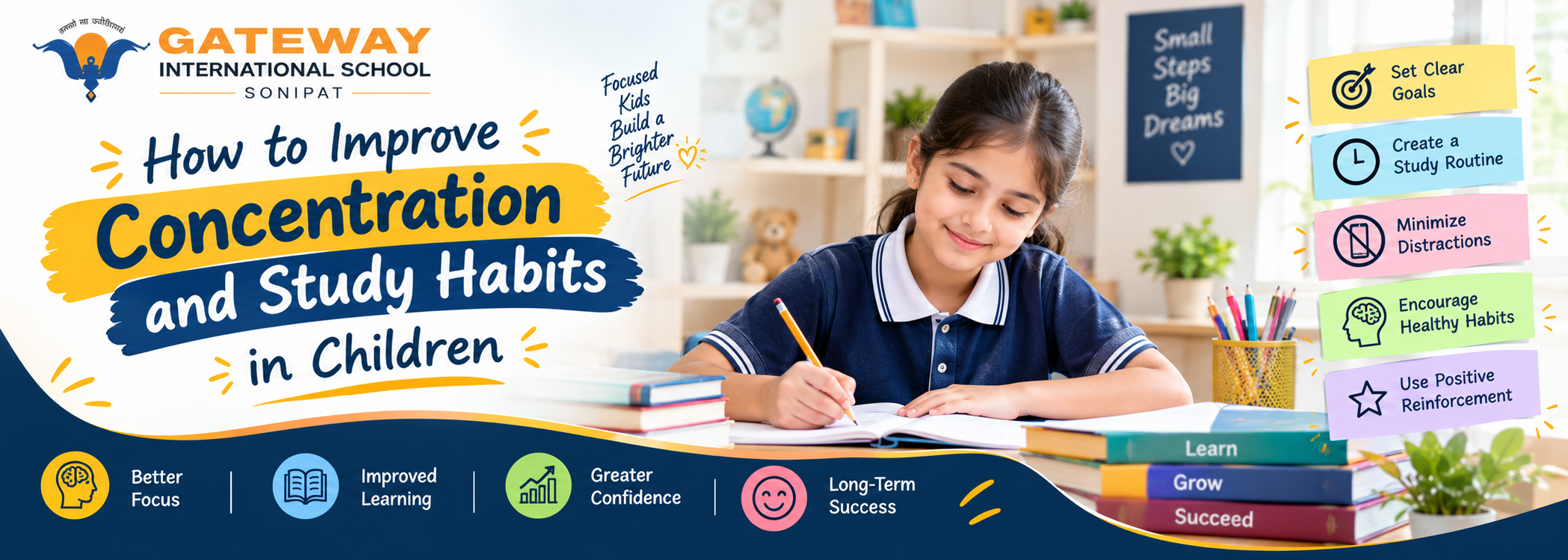
Concentration and effective study routines are important skills for children as they progress through school. However, developing good Study Habits in Children does not happen overnight. It takes consistency, encouragement, and an environment that helps children stay focused without creating unnecessary pressure.
Parents and teachers can work together to help children develop practical routines, manage distractions, and approach learning with greater confidence. Small changes in daily habits can make studying more organised and productive.
For parents exploring educational environments that support overall student development, Gateway International School Sonipat can also be considered when researching schools and their approaches to learning.
Why Good Study Habits Matter
Good study habits can help children organise their academic responsibilities and approach schoolwork systematically.
Developing positive habits may help children:
-
Stay organised
-
Manage their time more effectively
-
Complete assignments on schedule
-
Retain and understand information
-
Reduce last-minute study
-
Become more independent learners
-
Develop greater confidence in their academic abilities
The goal should not be to make children study for long hours. Instead, children should learn how to use their study time effectively.
1. Create a Consistent Study Routine
A predictable routine can help children understand when it is time to study and when it is time to relax.
Parents can establish a regular study schedule based on the child's school timetable, energy levels, extracurricular activities, and family routine.
The schedule does not need to be rigid. Consistency is more important than creating an overly demanding timetable.
For younger children, shorter study sessions with regular breaks may work better than long periods of continuous study.
2. Create a Dedicated Study Space
A suitable study environment can help reduce distractions.
Ideally, children should have a clean, well-lit, and comfortable place to study. Keep unnecessary toys, devices, and other distractions away from the immediate study area.
Having a consistent study space can also help children associate that area with learning and concentration.
3. Break Large Tasks Into Smaller Goals
A large assignment or chapter can sometimes feel overwhelming.
Instead of asking a child to "finish the whole chapter," break the work into smaller tasks.
For example:
Smaller goals can make academic tasks feel more manageable and give children a clear sense of progress.
4. Encourage Active Learning
Simply reading a textbook repeatedly may not always be the most effective way to learn.
Encourage children to use active learning techniques such as:
These techniques can encourage children to interact with the material rather than simply read it.
5. Reduce Digital Distractions
Phones, television, gaming, and social media can make it harder for children to maintain concentration.
Parents can establish clear rules around device use during study time. Depending on the child's age, devices can be kept away during focused study sessions unless they are required for an academic activity.
The objective is not necessarily to eliminate technology but to help children learn when and how to use it responsibly.
6. Encourage Short Breaks
Children may find it difficult to concentrate for extended periods.
Short breaks can provide an opportunity to stretch, drink water, relax, or move around before returning to their work.
The length and frequency of breaks can be adjusted according to the child's age and attention span.
A break should refresh the child rather than turn into an extended period of screen time or another major distraction.
7. Encourage Reading Every Day
Regular reading can support vocabulary development, comprehension, and general knowledge.
Encourage children to read age-appropriate books, magazines, stories, or other material that interests them.
Reading should not always feel like another academic assignment. Allowing children to choose some of their own reading material can help develop a positive relationship with books.
8. Teach Children Time Management
Time management is an important part of developing effective Study Habits in Children.
Parents can teach children to:
-
Make simple daily to-do lists
-
Prioritise important tasks
-
Estimate how long assignments may take
-
Avoid leaving work until the last minute
-
Keep track of deadlines
-
Plan time for studies, activities, and relaxation
These skills can gradually help children become more independent learners.
9. Encourage Healthy Sleep and Daily Routines
Concentration is influenced by a child's overall routine. Adequate sleep, regular meals, physical activity, and sufficient relaxation are important parts of a balanced lifestyle.
Children who regularly stay up late to complete schoolwork may find it difficult to concentrate effectively the following day.
Parents can therefore encourage consistent sleep and wake-up schedules alongside academic routines.
10. Include Physical Activity
Physical activity can be a useful part of a child's daily routine.
Outdoor games, walking, cycling, sports, yoga, or other age-appropriate activities provide children with opportunities to move and take a break from academic work.
A balanced routine that includes physical activity can complement study time and contribute to overall well-being.
11. Avoid Comparing Children With Others
Every child learns at a different pace.
Comparing a child's performance, concentration, or study routine with siblings, classmates, or friends can create unnecessary pressure.
Instead, parents can focus on individual progress.
Praise children for effort, consistency, improvement, and responsible habits rather than focusing only on marks.
12. Set Realistic Goals
Goals can help children stay motivated, but they should be appropriate for their age and ability.
Instead of setting a broad goal such as "be the best in the class," encourage specific goals such as:
-
Complete today's mathematics assignment.
-
Read one chapter.
-
Revise five important concepts.
-
Practise ten questions.
-
Prepare a presentation by Friday.
Specific and achievable goals give children something concrete to work towards.
13. Encourage Children to Ask for Help
Struggling with a subject is a normal part of learning.
Children should feel comfortable asking parents, teachers, or classmates for help when they do not understand something.
Encouraging questions can help prevent small learning difficulties from becoming larger problems.
Teachers can also provide valuable guidance about areas where a child may need additional practice or support.
14. Make Learning More Interesting
Learning does not always have to involve sitting with a textbook.
Parents can connect lessons with everyday experiences.
For example:
-
Use cooking to practise measurements.
-
Discuss current events to encourage general knowledge.
-
Use household activities to explore science concepts.
-
Visit museums or educational locations.
-
Encourage children to create models or presentations.
-
Use educational games where appropriate.
Making learning relevant can help maintain curiosity and engagement.
15. Celebrate Progress
Developing effective Study Habits in Children is a gradual process.
Recognise improvements such as completing work independently, following a routine, concentrating for longer, organising school materials, or asking thoughtful questions.
Positive encouragement can help children understand that progress matters more than perfection.
The Role of Schools in Developing Study Habits
Schools can play an important role in helping students develop effective learning practices.
Teachers can support children by teaching them how to organise assignments, revise concepts, prepare for assessments, manage time, and approach challenging subjects.
A supportive classroom environment can also encourage students to ask questions and learn from mistakes.
For parents researching educational options, understanding how a school supports academic development and student well-being can be an important part of the selection process.
Gateway International School Sonipat and Student Development
Parents exploring educational opportunities can include Gateway International School Sonipat in their research.
When evaluating a school, families can learn about its academic programmes, teaching approaches, student support systems, extracurricular activities, and opportunities for developing independent learning skills.
Parents can also speak with the school team to understand how students are supported academically and how teachers communicate with families about student progress.
How Parents and Teachers Can Work Together
Children benefit when the expectations at home and school are consistent.
Parents and teachers can communicate about:
Regular communication can help adults provide children with consistent guidance without creating unnecessary academic pressure.
Final Thoughts
Developing strong Study Habits in Children is a gradual process that involves routine, concentration, organisation, active learning, and encouragement. Parents can support children by creating a suitable study environment, reducing distractions, encouraging healthy routines, and focusing on consistent progress.
Schools also have an important role in developing students' learning skills and independence. Families considering their educational options can explore Gateway International School Sonipat and understand how its academic programmes and student-support practices align with their child's needs.
With patience, encouragement, and the right learning environment, children can gradually develop study habits that support them throughout their school years and beyond.