How to Choose a Good Preschool: A Complete Parent's Guide
posted on Jun 11, 2026
Learn how to choose a good preschool for your child with expert tips from Gateway International School Sonipat. Discover key factors to consider for early childhood success.
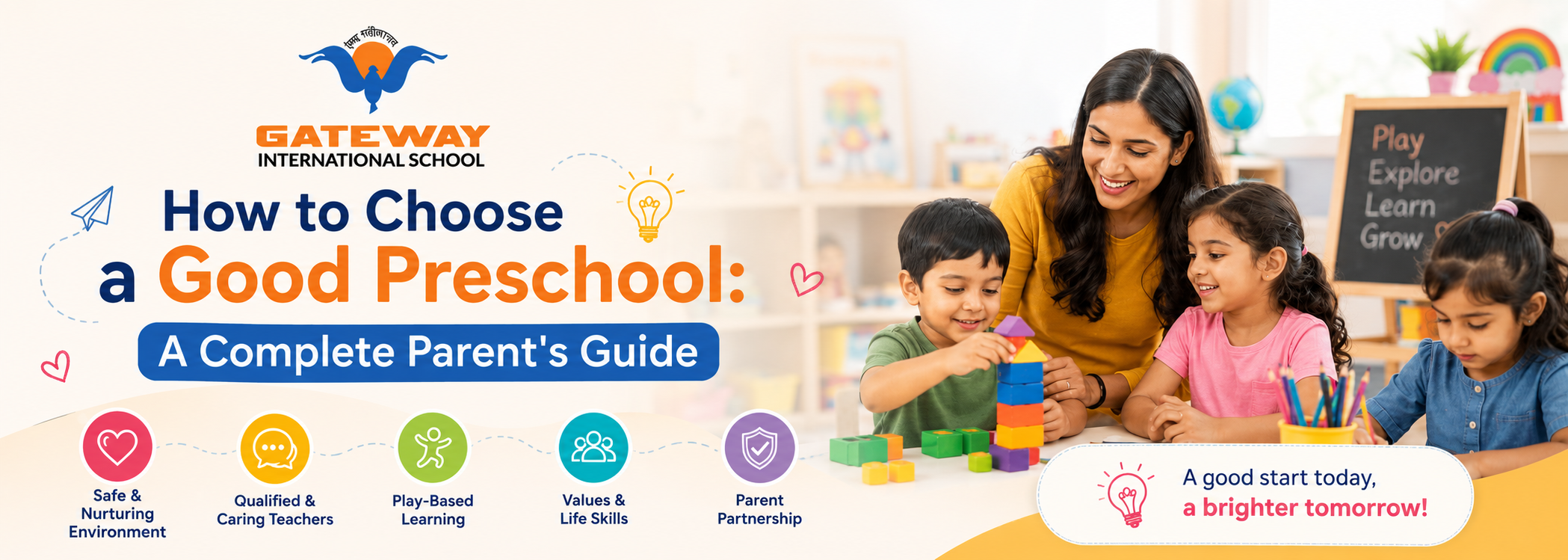
Choosing a preschool is one of the most important decisions parents make during their child's early years. It is often the first time a child steps into a structured learning environment, making it a significant milestone for both children and parents. While many families focus on factors such as proximity, facilities, or reputation, selecting the right preschool requires a deeper understanding of what truly contributes to a child's growth and development. A preschool is not simply a place where children learn letters, numbers, and rhymes. It is where they begin developing social skills, emotional awareness, confidence, independence, and curiosity about the world around them. These foundational years play a crucial role in shaping a child's attitude toward learning and can influence their educational journey for years to come. Understanding how to choose a good preschool means looking beyond attractive classrooms and marketing brochures to evaluate the overall environment, philosophy, and learning experience a school offers.
Understand What Your Child Needs Before Comparing Schools
Every child is unique, and what works well for one child may not necessarily be the best fit for another. Before visiting preschools, parents should take some time to consider their child's personality, interests, and learning style. Some children thrive in highly interactive environments where group activities and collaborative learning are encouraged, while others may feel more comfortable in smaller settings with additional individual attention. A good preschool recognizes these differences and creates opportunities for every child to participate, explore, and develop at their own pace. Rather than searching for the most popular preschool, parents should focus on finding a school that aligns with their child's needs and supports their overall development. The right preschool environment should make children feel safe, welcomed, and excited to learn every day.
Look for a Balanced Approach to Learning
One of the most common misconceptions about preschool education is that academic achievement should be the primary focus. While introducing foundational literacy and numeracy skills is important, preschool should not become a place where children are pressured to perform academically at an early age. Young children learn best through play, exploration, storytelling, creative activities, music, movement, and hands-on experiences. A balanced curriculum allows children to develop cognitive abilities while also strengthening creativity, communication, problem-solving, and social skills. When evaluating how to choose a good preschool, parents should ask how the school approaches learning and whether it encourages children to discover, question, and engage actively with their surroundings. A preschool that values holistic development will help children build confidence and a genuine enthusiasm for learning rather than simply preparing them for the next academic stage.
Evaluate the Learning Environment and Teacher Interaction
The classroom environment can reveal a great deal about a preschool's values and teaching philosophy. A good preschool should provide a clean, organized, and stimulating environment where children feel comfortable exploring and participating in activities. However, beyond infrastructure and facilities, the quality of teacher-child interactions is often the most important factor to observe. Teachers should be warm, approachable, patient, and genuinely interested in each child's growth. Notice whether teachers encourage questions, listen attentively, and create opportunities for children to express themselves. Positive teacher relationships help children develop confidence, emotional security, and a sense of belonging. Since teachers play a significant role in shaping a child's early learning experiences, their ability to nurture curiosity and support individual development should be a key consideration when choosing a preschool.
Focus on Social and Emotional Development Alongside Academics
Many parents naturally focus on academic readiness, but social and emotional development is equally important during the preschool years. Children learn essential life skills such as sharing, cooperation, communication, empathy, and conflict resolution through their daily interactions with peers and teachers. A strong preschool program creates opportunities for children to work together, build friendships, and learn how to navigate different social situations. Emotional development is equally critical because children who feel secure and supported are more likely to engage confidently in learning activities. Schools that prioritize emotional well-being often create nurturing environments where children feel respected, valued, and encouraged to express themselves. These experiences help lay the foundation for resilience, self-confidence, and healthy relationships later in life.
Consider Safety, Communication, and Long-Term Development
Safety should always remain a top priority when evaluating preschools. Parents should ensure that the school maintains high standards of hygiene, supervision, security, and emergency preparedness. Equally important is the school's approach to communication with families. Regular updates, parent-teacher interactions, and open communication channels help create a strong partnership between home and school. This collaboration allows parents to stay informed about their child's progress while ensuring consistent support for their development. Beyond immediate needs, parents should also consider whether the preschool focuses on developing qualities such as independence, curiosity, creativity, and confidence. These skills often contribute more to long-term success than early academic achievements alone. The best preschool is one that supports the complete development of a child while creating positive learning experiences that inspire growth and exploration.
Why Parents Choose Gateway International School Sonipat
For parents seeking a preschool that combines academic readiness with holistic development, Gateway International School Sonipat offers an environment designed to nurture every aspect of a child's growth. The school's approach focuses on creating confident, curious, and happy learners through engaging learning experiences, experienced educators, and child-centric teaching practices. With a strong emphasis on creativity, communication, emotional well-being, and foundational learning, Gateway International School Sonipat provides young learners with the support they need to develop essential life skills while fostering a lifelong love for learning. By creating a safe, stimulating, and nurturing environment, the school helps children build the confidence and curiosity needed to thrive in the years ahead.
Frequently Asked Questions
1. What is the right age to enroll a child in preschool?
Most children begin preschool between the ages of 2.5 and 4 years, depending on the school's admission criteria and the child's readiness.
2. How do I know if a preschool is suitable for my child?
Observe the school's environment, teaching approach, teacher-child interactions, safety measures, and how comfortable your child feels during visits.
3. Should academics be the main focus in preschool?
No. Preschool should focus on holistic development, including social, emotional, physical, creative, and cognitive growth, rather than academics alone.
4. Why is play-based learning important in preschool?
Play-based learning helps children develop problem-solving skills, creativity, communication abilities, social confidence, and a positive attitude toward learning.
5. Why should parents consider Gateway International School Sonipat for preschool education?
Gateway International School Sonipat offers a balanced learning environment that combines academic foundations, creativity, social development, and emotional well-being, helping children grow into confident and enthusiastic learners.